
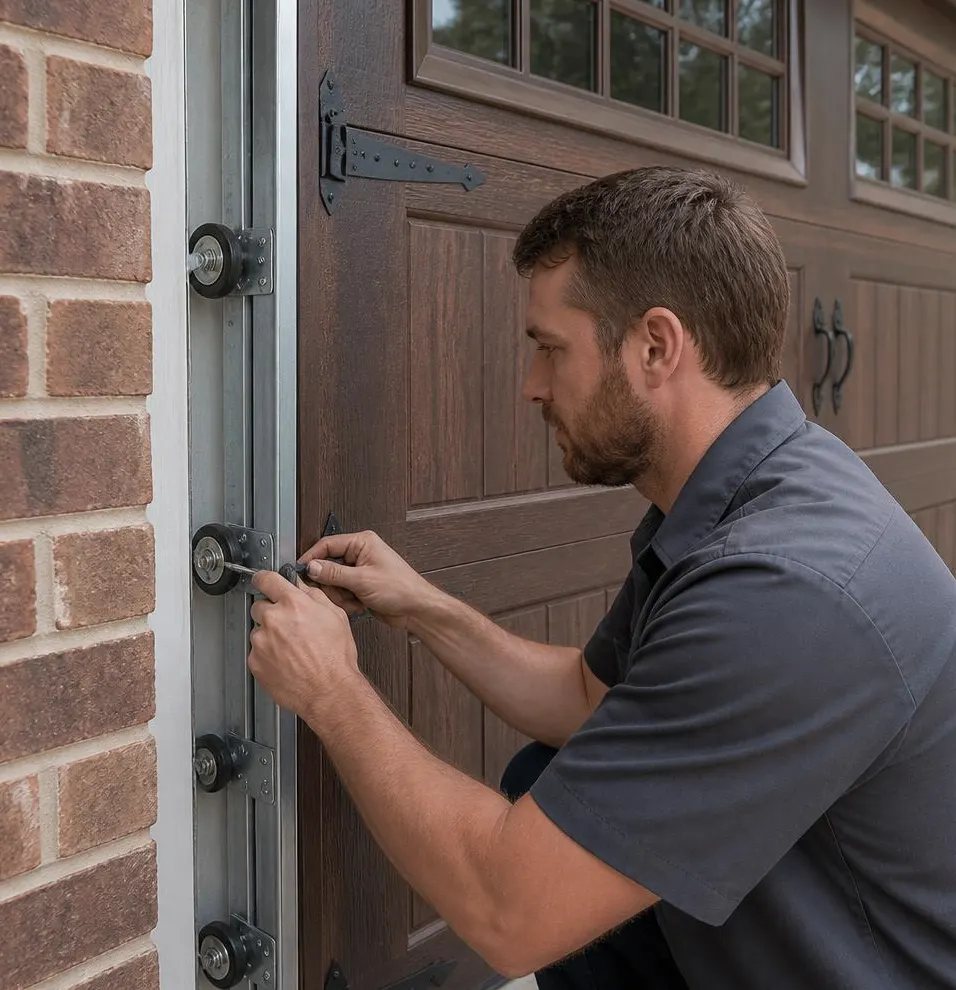
What We See on a Typical Service Call
On most calls about a noisy or sticky garage door in this area, the hardware tells the same story: hinges with a thin crust of orange rust, rollers packed with gritty residue, and a can of WD-40 sitting on the shelf in the garage. Homeowners did the right thing by trying to fix the squeak themselves, but they often used the wrong product or sprayed it in the wrong place. In Liberty County, the heat, humidity, and salt-tinged air moving up from the coast speed up corrosion and gum up moving parts faster than in drier climates, so a garage door here needs more frequent attention than the manual from a big-box store usually suggests.
Tools You'll Need
- A sturdy step ladder
- Work gloves and safety glasses
- Clean, lint-free rags
- A small stiff brush (an old toothbrush works)
- White lithium grease (for metal hinges, springs, and the opener rail)
- Silicone-based garage door lubricant spray (for nylon rollers, tracks' roller contact points, and weatherstripping)
- A flashlight for checking dark corners of the track
Step-by-Step: How to Lubricate Your Garage Door
- Disconnect the opener and close the door. Pull the red release cord so the door is fully manual, then make sure it's closed before you start working on hinges or springs.
- Clean before you lubricate. Wipe down hinges, rollers, and the track with a dry rag to remove dust, pollen, and the sticky film that builds up from old lubricant mixing with humidity. Never skip this step — spraying fresh lubricant over old grime just creates more buildup.
- Lubricate the hinges. Apply a small amount of white lithium grease to each hinge pivot point, working the door up and down by hand a few inches to let it work in. Wipe off any excess so it doesn't drip or attract dust.
- Lubricate the rollers. If you have metal roller bearings, a light coat of white lithium grease on the bearing (not the wheel surface) is fine. If you have nylon rollers, use the silicone spray instead — petroleum-based grease can break down nylon over time, especially with the heat this area sees for much of the year.
- Lightly lubricate the springs. A thin coat of lithium grease on torsion springs helps reduce friction and slows rust. Spray from a safe distance and avoid heavy pooling, which just attracts grit.
- Do not lubricate the track itself. The vertical and horizontal tracks should stay clean and dry — lubricant there collects dust and can actually make rollers slip. Instead, wipe the tracks clean and focus your lubricant on the rollers that ride inside them.
- Lubricate the opener's chain or screw rail. A light coat of white lithium grease on the opener rail keeps it running quietly. Check your opener manual, since some belt-drive units shouldn't be lubricated at all.
- Lubricate the lock and weatherstripping. A quick spray of silicone lubricant on the lock mechanism and a light wipe-down of the rubber weatherstripping helps both hold up against swelling and sticking caused by afternoon humidity.
- Cycle the door and listen. Reconnect the opener, run the door up and down a few times, and listen for grinding, popping, or uneven movement. That noise is often the first sign something needs more than lubrication.
Products to Avoid
- WD-40 as a primary lubricant — it's a solvent and light penetrant, not a long-lasting lubricant. It evaporates quickly and leaves parts drier and dirtier within weeks, which is exactly why so many doors we service have gummed-up hardware despite regular spraying.
- Standard motor oil or household oil — it's too thin, runs off quickly in the heat, and attracts dust and pollen that turns into grime.
- Thick grease on nylon rollers — it can stiffen and crack nylon over time, especially with repeated heat exposure during Florida summers.
What a Homeowner Can Handle vs. What Needs a Technician
Cleaning and lubricating hinges, rollers, the opener rail, and the lock are reasonable DIY tasks for most homeowners with basic tools and a step ladder. Where you should stop and call a technician: if a spring looks stretched, has a visible gap in the coils, shows heavy rust pitting, or the door feels unusually heavy or uneven when lifted by hand. Torsion springs are under high tension and are not safe to adjust or replace yourself. Likewise, if the door is off its track, the cables look frayed, or the opener strains and reverses on its own, that's a sign of a mechanical problem lubrication won't fix.
When to Call Hosford Garage Door Pro
If you've lubricated everything and the door still grinds, sags, or hesitates, it's worth having a technician take a look before storm season puts extra strain on the system. We offer Garage Door Maintenance & Tune-Up visits that include a full inspection of springs, cables, and hardware, plus Cable & Roller Replacement when parts are too worn for lubrication to help. Catching rust or wear early is a lot cheaper than dealing with a spring failure or an off-track door during an afternoon downpour.
If your garage door needs more than a squirt of grease, call Hosford Garage Door Pro for fast, reliable service throughout Hosford, Bristol, Blountstown, and the rest of Liberty County.